Black Mold?
Don't Take Chances! Call the Top Black
Removal Company in Woodinville and get cleaned up FAST!



Why Choose Us?
- Certified Pros
- Available 24/7/365
- Rapid Response
- Fully Licensed And Insured
- We Work With Your Insurance Company
Call Now (425) 225-3224
Professional Mold Removal in Woodinville, Washington
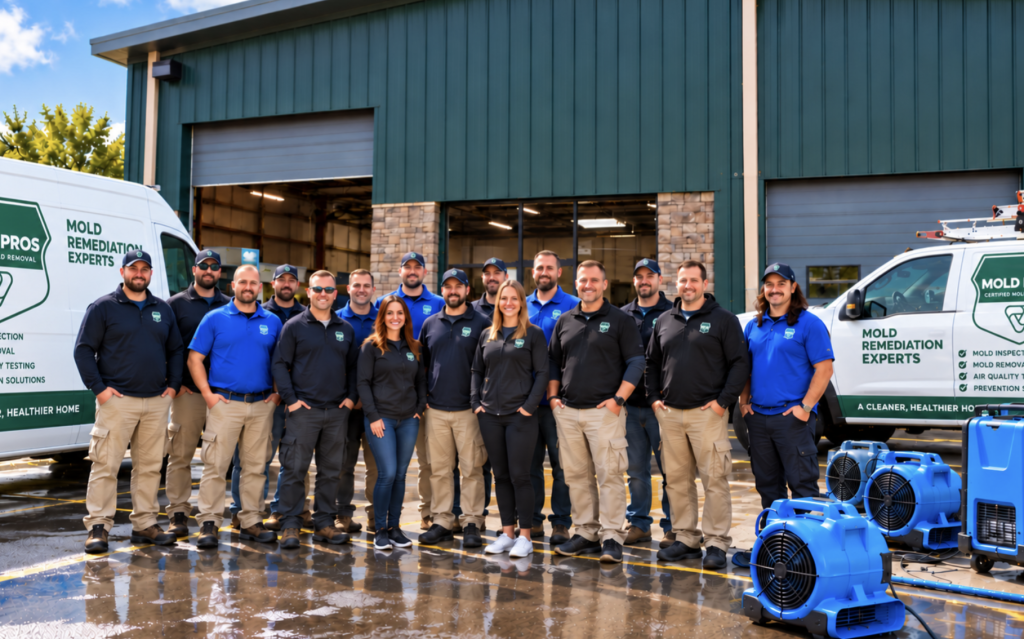
Mold cleanup should start with the moisture problem, not with paint or a strong household cleaner. Our team looks at the affected materials, the work area, and the likely source before building a removal plan. We use containment and HEPA filtration to limit dust and debris moving into unaffected parts of the building. Woodinville Mold Remediation Pros is IICRC certified, and we are in good standing with the BBB.
What Happens During Professional Mold Removal?
We begin by reviewing what you noticed and where moisture entered or collected. That could include a roof or window leak, a plumbing problem, a damp crawl space, or indoor condensation. We then identify the materials involved and separate surfaces that can be cleaned from materials that need removal. This first review helps keep the work focused and reduces unnecessary disturbance.
Containment uses plastic barriers and controlled work practices to keep mold dust from spreading. We use personal protective equipment and HEPA air scrubbers when the scope calls for them. A HEPA air scrubber filters fine particles from the air while the work area is being cleaned. We also protect nearby finishes, furnishings, and passageways as much as the work conditions allow.
Source control is part of the removal plan because mold returns when moisture remains. We look for clues such as wet drywall, stained insulation, damp framing, or moisture beneath flooring. In Woodinville, prolonged fall and winter rain can expose roof, siding, window, and flashing failures. Wooded or sloped lots can also direct runoff toward crawl spaces, foundations, and lower walls.
How Woodinville Building Conditions Shape the Work Plan
Building location and construction affect how far moisture travels and how difficult materials are to dry. A home near a river valley may need a closer look at flood exposure and saturated lower materials after heavy rain. A property on a sloped lot may instead show runoff near the foundation or dampness beneath the floor. We do not infer flood exposure from a mailing address, so property-specific mapping remains useful.
Crawl spaces need special care because exposed soil, missing vapor barriers, drainage problems, and poor airflow can keep joists and subfloors damp. Basements present different concerns, including foundation cracks, drainage failures, waterproofing problems, and pressure from surrounding soil. Attics can be affected by roof leaks or bathroom and dryer vents that release moisture into the roof space. These differences change the access, protection, cleaning, and material-removal work.
Commercial projects also require attention to how the building operates during the work. Offices, apartments, schools, retail spaces, medical facilities, and industrial buildings may have shared air movement and busy access routes. Hospitality buildings, tasting rooms, breweries, and similar properties may need work areas separated from customers and staff. We explain the planned work area and occupancy concerns before the job begins, based on the actual scope.
What’s Included in Mold Remediation?
Our mold remediation scope focuses on controlling the affected area, removing impacted materials when needed, and cleaning surfaces that remain suitable for restoration. The exact work depends on the moisture source, material condition, access, and affected area. Porous materials often require different treatment from hard, nonporous surfaces. The work plan identifies those differences before removal starts.
- Work-area containment, protective measures, and HEPA air filtration when the scope requires them.
- Careful removal of affected porous materials, such as drywall, insulation, carpet, and damaged subflooring.
- Cleaning of suitable hard surfaces, framing, concrete, tile, and other materials that can remain in place.
Drywall and insulation often absorb moisture and hold contamination within their fibers. Carpet and padding can retain water below the visible surface, while subflooring may need access from above or below. Framing, concrete, and tile are less absorbent, but joints, cracks, and unfinished surfaces still require careful cleaning. We avoid treating every material as though it needs the same method.
What’s Not Included in Mold Remediation?
Mold remediation does not automatically include rebuilding finished walls, replacing cabinets, repainting, or installing new flooring. Those steps are reconstruction tasks and require a separate scope when they are needed. Repairs to roofs, plumbing, drainage, gutters, foundations, or ventilation systems also need to be addressed as source-control work. Leaving the moisture source unresolved increases the chance of another mold problem.
- Independent mold testing or laboratory analysis, because we do not perform mold testing.
- Automatic reconstruction of removed drywall, insulation, flooring, cabinets, or other finishes.
- Repairs to the roof, plumbing, sewer, grading, drainage, HVAC, or ventilation systems unless separately arranged.
We do not identify a mold species from its color. What people commonly call black mold can have a dark appearance, but color alone does not establish the species or its risk. If you need independent documentation about the type or extent of a problem, independent testing or assessment can be useful. We discuss the observed conditions and the removal scope without making a color-based diagnosis.
How Do Materials Change the Removal Method?
Drywall is often removed when contamination or moisture extends through the paper facing or into the board. Insulation is usually difficult to clean fully once it is wet or visibly affected, especially in enclosed wall and ceiling spaces. Carpet, pad, and other soft materials can hold moisture and particles beneath the surface. We remove affected porous materials carefully so debris stays inside the controlled work area.
Wood framing may be cleaned when it remains structurally sound and accessible. Concrete and tile generally require surface cleaning, attention to grout or cracks, and correction of the moisture source. Attic sheathing, crawl-space joists, and subfloors can require longer access because insulation, stored items, or tight clearances block the work area. The condition of each material matters more than the label of the room.
Black mold cleanup follows the same basic principle: control the area, remove materials that cannot be cleaned, and clean materials that can remain. We do not use a darker color as a reason to claim a particular species. Visible growth also does not show the full extent of hidden moisture inside a wall, ceiling, floor, or crawl space. That is why the work plan considers water movement and material condition together.
How Much Does the Job Cost?
Actual mold remediation costs vary with affected materials, work-area size, containment needs, access, and the moisture source. A small accessible area with limited damage takes a different scope from a crawl space, attic, flooded lower level, or commercial work area. Removal behind walls or beneath flooring also requires more protection and labor than surface cleaning. An inspection is needed before a final scope and price can be provided.
Job size also depends on whether the moisture source is active or has already been corrected. A roof leak, plumbing leak, drainage problem, or ventilation issue should be addressed so cleaned areas stay dry. Heavy rain and wet ground conditions around Woodinville can make exterior drainage part of the investigation. We separate the visible mold work from other repairs so you know what the remediation scope covers.
What Should You Do Before Work Begins?
Stop an active plumbing leak if you can do so safely, and keep people away from visibly damaged materials. Do not paint over mold or use a household fan to blow air across an affected area. Avoid disturbing drywall, insulation, carpet, or stored items that may release dust. If sewage or contaminated floodwater is involved, avoid contact and keep children and pets away.
Write down when the problem was first noticed and what water event preceded it. Photos can help show stained ceilings, wet flooring, condensation, or recurring leaks before materials are moved. Check whether the property has a crawl space, basement, attic, or finished lower room. These details help us prepare for access and protect unaffected areas.
Call (425) 225-3224 to discuss the conditions you found and arrange the next step. We will ask where the moisture appeared, what materials are affected, and whether the source is still active. We can then explain what the first visit is intended to review and what information helps define the work area. If water is still entering, shut it off or stop the source safely before calling.
Frequently Asked Questions
Can mold be cleaned from drywall?
Drywall is porous, so visible cleaning does not always remove moisture or growth inside the board. We evaluate whether the affected section can remain or needs careful removal. The decision depends on the condition, depth of damage, and ability to control debris. Painting over the surface is not a substitute for correcting the moisture source.
Do I need to leave my home during mold remediation?
Occupancy depends on the work area, containment plan, building layout, and condition of the affected materials. A small isolated area creates different concerns from work involving shared air systems, bedrooms, or major demolition. We explain access and occupancy expectations before work starts. Follow the site instructions and keep children, pets, and unprotected occupants away from the controlled area.
What if the mold keeps coming back?
Recurring mold usually points to moisture that remains or returns. Common sources include plumbing leaks, roof and window leaks, poor drainage, crawl-space dampness, condensation, and weak bathroom ventilation. Cleaning without fixing that source leaves the building vulnerable to another problem. Document the recurrence and check the area for damp materials, odors, staining, or active water entry.
Where can I learn more about contractor requirements?
The state health department advises consumers to check contractor registration, bonding, insurance, and relevant training. The state labor and industries agency explains contractor registration requirements. Schools also have specific moisture-control rules under the applicable administrative code for educational facilities. These public resources can help you understand questions to ask before work begins.